
Local Floor Repair or Full Sanding: What Is Best for Your Timber Floor?
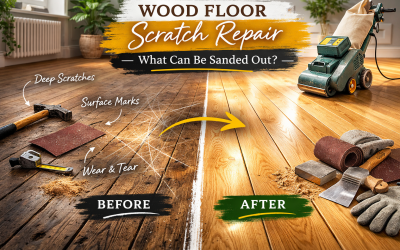
If you have a scratched board, a dent near the sofa, a dark water mark by the radiator, or a small patch of finish failure in one corner, the first question is usually the same: can this be repaired without sanding the whole floor? In many cases, yes — but not always. The right answer depends on the type of timber floor, the depth of the damage, the age of the existing finish, colour variation, board movement, and how visible the repair area will be in natural light.
At Hackney Floor Sanding, local timber floors are repaired, restored, stained and sealed across Hackney, with services covering everything from damaged boards and parquet blocks to full sanding and resealing. The company’s public site specifically states that it can repair and replace damaged boards or blocks, sand away old finishes, stain floors, and protect them with lacquer, hardwax oil or natural oil.
For homeowners, landlords and commercial property managers in Hackney, that matters because not every damaged floor needs a complete strip-back. Sometimes a careful localised repair is the most sensible route. In other situations, a patch repair can stand out more than the original damage — especially on older boards, sun-faded finishes, stained floors, or large open-plan rooms. That is why a proper assessment always comes first. You can see the main service overview here: Floor Sanding Hackney and request advice directly from the team via the site’s main contact route.
The short answer: yes, but only when the damage is truly local
A local repair without sanding the whole floor is usually possible when:
- the damage is confined to a small area
- the surrounding boards are stable
- the finish can be blended or recoated successfully
- the timber colour can be matched closely
- the floor does not have severe wear across the whole room
This is especially true for:
- isolated scratches
- minor dents
- light gouges
- small finish breakdowns
- a single split or loose board
- a few damaged parquet blocks
- narrow gaps or small cosmetic defects
It becomes much harder when:
- the finish has aged unevenly
- the timber has darkened from UV exposure
- the floor is stained
- there are widespread scratches across the room
- multiple boards are cupped, loose or noisy
- water damage has spread under the finish
- the repair area sits in the middle of a highly visible section of floor
The National Wood Flooring Association notes that deeper scratches in the wood often require sanding and refinishing to remove the damage properly, while Bona also supports recoat systems only where the existing finish is suitable for that treatment. (nwfa.org)
What kinds of local floor damage can often be repaired?
1. Surface scratches in the finish
If the scratch is in the topcoat only, the timber below may be untouched. In that case, the repair might involve:
- cleaning and decontaminating the area
- lightly abrading the affected section
- applying a compatible maintenance coat or local recoat
- blending sheen levels with the surrounding finish
This tends to work best on clear lacquered floors with minor wear. Hackney Floor Sanding’s pricing page confirms maintenance options such as clean, buff and one coat or two coats of lacquer, hardwax or oil, which supports this kind of lighter restoration approach where suitable.
2. Small dents and compression marks
A dent from a dropped object may be repairable without a full-room sand if the timber fibres are compressed rather than fully torn out. Depending on species and finish, a tradesman may:
- reduce the visibility of the depression
- fill and colour-match the defect
- seal the repair to protect it
Results vary. On a rustic floor, a neat cosmetic repair may disappear well. On a sleek, modern, highly reflective floor, even a good repair can still be visible from some angles.
3. Local gouges, chips and nail holes
These often respond well to cosmetic filling. The Hackney pricing page explicitly lists cosmetic gap filling for small cracks, cuts and nail holes from £3.00 per m², showing that the business already offers this type of fine-detail repair.
4. Small board-edge damage
If one section of one board is chipped, split or crushed, a localised repair or partial board replacement may be enough. The homepage and pricing page both support the fact that damaged boards can be repaired or replaced, including reclaimed pine floorboard changes priced per linear metre.
5. Isolated parquet block damage
Parquet is repairable, but it needs more precision. Damaged blocks often have to be:
- lifted carefully
- replaced with matching size/species blocks
- levelled accurately
- filled where needed
- colour-matched and sealed
This is one of the areas where patch repair can work brilliantly — provided the surrounding parquet is stable and the finish can be blended convincingly.
When local repair is the smarter option
A local repair is often the best choice when the floor is otherwise in good condition. That usually means the finish still has life in it, the sheen is fairly consistent, and the issue is genuinely confined to one place.
Good candidates for spot or partial repair:
- a single burn mark from a hot appliance
- one or two pet scratches
- a dent caused by furniture movement
- local finish wear near a doorway
- a cracked parquet block
- a small resin fill failure
- one damaged board after a plumbing leak that was resolved quickly
For these cases, a full-room sand may be unnecessary disruption and extra cost. If the rest of the floor is performing well, a measured repair can preserve more original material and get the room back into use faster.
When sanding the whole floor is usually the better decision
This is where honest advice matters. A contractor should not sell a “small repair” if the final result is likely to look patchy.
Full sanding is often better if:
- scratches run across most of the room
- the lacquer has worn through in traffic lanes
- the colour has faded unevenly in sunlight
- older repairs already stand out
- there are multiple loose, cracked or replaced boards
- the room has a stained finish that is difficult to patch invisibly
- you want a consistent sheen and colour everywhere
Hackney Floor Sanding’s own site emphasises full sanding and restoration as a core service, including sanding only, sanding plus multiple coats of clear lacquer, hardwax oil or oil systems, and upgrades to high-traffic lacquer. That suggests the business is set up for both local repair work and complete restoration, depending on what the floor actually needs.
Why patch repairs sometimes show more on older Hackney floors
Hackney homes often feature timber floors with age, character and variation. That is part of their appeal — but it also makes local repair more technically demanding.
Older floors may have:
- ambering from age
- uneven UV fading around rugs and furniture
- historic stain layers
- old wax, polish or maintenance product residue
- previous filler repairs
- mixed board widths or reclaimed sections
- minor undulation and movement
All of these affect how a local repair behaves. A fresh patch of finish can sit cleaner, flatter or glossier than the surrounding area. Even if the timber repair is structurally perfect, the light reflection may give the patch away.
That is why experienced wood floor specialists test, blend and assess before promising an “invisible” result.
Repair methods commonly used without sanding the whole floor
Local filling and colour matching
For minor cracks, chips, cuts and shallow defects, colour-matched filler may solve the problem neatly. On the Hackney Floor Sanding pricing page, cosmetic gap filling is listed separately from wider gap solutions, which indicates a distinction between small cosmetic repairs and more structural work.
Resin filling for narrow gaps
Where narrow shrinkage gaps or small local splits appear, resin-and-dust style filling can help — but only when the floor’s movement is within reason. The site also lists sawdust and resin filling for gaps up to 3 mm.
Slivers or wider-gap systems
For broader openings, flexible fillers or timber slivers may be better. The Hackney pricing page lists reclaimed pine slivers for wider than 3 mm gaps, and a flexible gap system for wider movement gaps up to 9 mm.
Board replacement
Where damage is too deep or localised filling would be poor value, replacing the affected board is often smarter. This is especially relevant for:
- badly split pine boards
- water-swollen edges
- charred or burnt sections
- severe gouges
- rotten or unstable timber
Local abrasion and recoat
If the finish system allows it, a section may be cleaned, lightly abraded and recoated. Bona’s recoat treatment is specifically designed to clean up and abrade an existing polyurethane surface before applying a fresh coat of finish, but suitability depends on the existing coating and contamination levels. (Bona)
Repair kits for very minor damage
For tiny marks, manufacturer repair products can sometimes help. Bona’s homeowner repair set is designed for minor damage and includes wood floor lacquer for quick, small-scale fixes. (Bona)
What about lacquered, oiled and hardwax-oiled floors?
The finish type makes a major difference.
Lacquered floors
These can be excellent for durability, but local sheen matching can be tricky. A repair may need careful abrasion and recoating to blend properly. High-traffic systems such as Bona Traffic HD have defined recoat and cure windows; Bona currently states recoating is typically possible after 2–3 hours, with floors generally ready for full use after around 12 hours and coverings avoided for at least 3 days. (Bona)
Oiled or hardwax-oiled floors
These are often more forgiving for local maintenance because they can sometimes be refreshed in sections more easily than lacquer, depending on the product and wear pattern. Osmo’s product range is commonly used for this kind of finish and is a sensible external authority to reference for maintenance compatibility and finish guidance. (Bona)
Stained floors
These are the hardest to patch invisibly. Matching stain depth, undertone and wear is specialist work. A small repair may still be possible, but expectations must be realistic.
Can parquet be repaired without sanding the whole floor?
Yes — often. But parquet needs a more careful hand than straight floorboards.
If the issue is:
- one loose block
- one cracked block
- a small patch of movement
- local adhesive failure
- isolated surface damage
then a parquet patch repair may be all that is needed. The challenge lies in:
- matching block size
- matching species and grain direction
- setting the height perfectly
- blending filler lines
- making the finish look coherent with surrounding blocks
Because parquet reflects light in many directions, poor patching shows quickly. Good patching, however, can preserve the wider floor beautifully.
What homeowners should not do
A lot of local floor damage gets worse because of enthusiastic DIY fixes.
Avoid:
- using generic wood filler straight from the shelf without colour matching
- applying polish over worn lacquer to “hide” defects
- sanding one board aggressively with a hand sander
- spot-staining without testing
- mixing incompatible oil and lacquer systems
- using household varnish on a floor repair
- scrubbing water-damaged boards with too much moisture
These shortcuts often create a shiny patch, dark halo, flat spot, or sticky finish edge that later costs more to put right.
How a professional decides between patch repair and full sanding
A proper assessment usually looks at:
Extent of damage
Is it really local, or is that just the worst visible area?
Structural condition
Are the boards stable, level and dry?
Finish compatibility
Can the existing finish accept a local repair or recoat?
Colour matching risk
Will the repaired section stand out due to ageing or UV change?
Room visibility
Is the patch in strong side light near a window?
Cost efficiency
Will a patch repair save meaningful money, or would full sanding offer better long-term value?
The Hackney pricing page is useful here because it shows how services are broken down: cosmetic filling, gap systems, board changes, sanding-only packages, full finishing systems, maintenance coats, and labour rates. That supports a practical “repair first where sensible, full restore where needed” approach.
Practical examples
Example 1: One dent beside the dining table
If the finish is otherwise sound, this may only need cosmetic repair and local blending.
Example 2: Black water mark around a plant pot
If the stain has penetrated deeply into the timber, local sanding may help, but colour matching can still be difficult. Sometimes a board replacement is cleaner.
Example 3: Two cracked parquet blocks by the doorway
Lift, replace, fill, abrade locally and reseal. Often no full-room sanding needed.
Example 4: Widespread scratches from a dog across the lounge
This is rarely a true local repair job. Full sanding of the room usually gives the best finish.
Example 5: Small finish wear in a hallway lane
A maintenance buff and recoat may solve it if the finish system is suitable. Bona’s recoat guidance is relevant here. (Bona)
The value question: repair now or restore later?
For many Hackney households, the best route is staged:
- repair the isolated damage now
- protect the floor properly
- plan a full sand and finish later when wider wear justifies it
That is often a sensible compromise in tenanted properties, busy family homes, or commercial spaces where downtime matters.
But if you already have:
- multiple patched areas
- heavy finish wear
- obvious colour inconsistency
- roughness underfoot
- recurring movement problems
then putting money into more local fixes may be false economy. A full professional sanding and resealing may deliver a better-looking and longer-lasting result.
Final answer
So, can local floor damage be repaired without sanding the whole floor? Yes — very often, if the damage is genuinely local and the surrounding floor is still in good condition. Small scratches, chips, minor dents, isolated board damage, narrow gaps and some parquet problems can often be repaired successfully without sanding the entire room.
However, if the damage is deeper, more widespread, or tied to uneven colour and finish wear, then a complete sand and refinish will usually produce the cleaner and more durable result.
The best outcome comes from choosing the repair method that suits the floor you actually have — not the one that merely sounds cheapest at first glance.
If you are in Hackney and want an honest assessment, start with the main service page at Hackney Floor Sanding or review the company’s published pricing and repair options here: Prices. The publicly visible site confirms board repair/replacement, sanding, staining, sealing, gap filling, cosmetic filling and maintenance recoats, which are exactly the services that determine whether a local repair is viable.