
The Truth About Engineered Wood Flooring and Underfloor Heating
If you are planning a renovation in Hackney and want a floor that feels warm, stable and stylish, engineered wood flooring is often one of the strongest options for use with underfloor heating. On the Hackney Floor Sanding website, the company offers wood floor sanding, restoration and finishing services in Hackney, alongside contact and quote pages for local enquiries, making this a relevant topic for homeowners comparing restoration and installation choices.
In most cases, yes, engineered wood flooring is suitable for underfloor heating. The reason is simple: engineered boards are built in layers, which generally makes them more dimensionally stable than traditional solid timber when temperatures rise and fall. Industry guidance from NWFA materials and manufacturer guidance commonly point to engineered wood as one of the better choices over heated subfloors, provided the heating system, subfloor, moisture levels and installation method are all handled correctly.
That said, “suitable” does not mean “fit anything and hope for the best”. Underfloor heating changes the way timber behaves. If the floor is too thick, the subfloor is too damp, the heating is ramped up too quickly, or the wrong board is chosen, you can end up with movement, gaps, cupping, adhesive stress or shortened floor life. Manufacturers and technical guidance repeatedly stress gradual commissioning, adherence to product instructions and strict temperature control.
For homeowners looking at floor sanding in Hackney or planning a new wood flooring project, the real question is not only whether engineered flooring can work over underfloor heating, but which type of engineered floor is best, how it should be installed, and what conditions need to be controlled before and after fitting. The Hackney site’s own pricing page also shows that wood floor oil, hardwax oil and staining are active service considerations, which matters because the finish system affects ongoing care and appearance after installation.
Why engineered wood is usually the better choice over underfloor heating
Engineered wood flooring is made from a real wood wear layer bonded over a plywood or multi-layer core. That layered construction helps the board resist expansion and contraction better than a single-piece solid board. NWFA guidance specifically notes that engineered wood flooring is more dimensionally stable than solid wood flooring, which is one reason it is widely recommended over radiant or heated subfloors.
This does not mean solid wood can never be used. Some manufacturers, including Junckers, publish guidance for hardwood floors over underfloor heating. But for many domestic projects in period flats, terrace houses and refurbished Hackney properties, engineered boards are the more forgiving and practical option because they cope better with the day-to-day thermal movement created by heated floors.
Another advantage is efficiency. Underfloor heating works best when the floor finish above it allows heat to pass through sensibly without creating unnecessary thermal resistance. Engineered boards are commonly made in thicknesses and formats better suited to this than very thick traditional solid planks. The precise board specification still matters, but engineered flooring is often the safer route when balancing comfort, appearance and stability.
The temperature rule most homeowners should know
One of the most repeated technical rules in wood-flooring-over-heating guidance is the maximum surface temperature. Many installation guides and trade references state that the floor surface should not exceed 27°C, though some products may require a lower limit. This is a floor-surface reading, not just whatever temperature appears on the room thermostat.
This matters because wood reacts to heat and dryness. If the floor surface is pushed too high, moisture can be driven out of the boards too quickly, leading to shrinkage, increased gapping or surface stress. Equally, if the heating system creates hot spots rather than an even spread, some parts of the floor may move more than others. Good design and proper commissioning are just as important as the boards themselves.
Best types of engineered wood flooring for underfloor heating
Not every engineered floor performs equally well. The safest choice is normally a board explicitly approved by its manufacturer for underfloor heating. That approval should cover board thickness, construction, installation method and the maximum permitted surface temperature. NWFA jobsite materials also highlight the importance of confirming whether a flooring product is approved over radiant heat.
In practical terms, look for:
1. Stable core construction
Multiply or birch-ply cores are often preferred because they provide reliable dimensional stability. Better core quality usually means more predictable movement and fewer surprises after installation. This is especially important in older Hackney homes where subfloor conditions are not always perfect.
2. Sensible board thickness
Very thick boards can reduce heat transfer efficiency. Many underfloor-heating-compatible engineered products are designed with balanced thicknesses that still allow a good real-wood wear layer without becoming unnecessarily resistant to heat flow. Manufacturer instructions should always override general rules.
3. Suitable timber species and cut
NWFA radiant-heat guidance notes that some species and cuts are more dimensionally stable than others, with quarter-sawn and rift-sawn material generally offering better width stability than plain-sawn boards. Oak is often chosen because it offers a dependable balance of stability, appearance and availability.
4. A finish compatible with heated living
Homeowners often ask whether oil, lacquer or stain makes any difference over underfloor heating. Bona product literature notes some finishing systems and primers are highly suitable for floors with underfloor heating, while hardwax/oil systems can offer a more natural appearance and easier spot repair in some cases. The right choice depends more on appearance, maintenance style and traffic level than on heating alone.
Installation method matters just as much as the board
A good board installed badly can still fail. Adhesive choice, moisture testing, subfloor preparation and heating-system commissioning all affect performance. Bona technical data for a wood-floor adhesive states that approved wood flooring over underfloor heating must be used only on subfloors that have been gradually dried and warmed according to the heating-up protocol, and that the screed temperature must stay controlled during installation.
Depending on the product, engineered flooring may be installed as a glue-down or floating floor. NWFA installation guidance includes both floating engineered and glue-down wood flooring systems, but also emphasises following the flooring manufacturer’s instructions. There is no one-size-fits-all answer. Some boards perform best when fully bonded; others are designed specifically for floating installation with the correct underlay system.
If the floor is being fitted over a heated screed, moisture testing is critical. A beautiful engineered floor can be ruined by residual construction moisture below it. This is why reputable contractors test the subfloor, review heating commissioning records, and avoid rushing the programme. In many real-world failures, moisture and commissioning errors are the actual cause, not the timber itself. That is consistent with the strong emphasis NWFA places on substrates, moisture control, acclimation and installation over radiant heating systems.
Common mistakes that cause problems
Turning the heating on too high, too quickly
Wood likes gradual change. Fast heat-up cycles can shock the boards and the adhesive system. Bona’s adhesive guidance specifically refers to a gradual protocol for drying and warming the subfloor before installation.
Choosing the wrong board just because it looks attractive
Some homeowners understandably fall in love with extra-wide planks or a very specific species. But not every board is ideal for heating. Wider boards, less stable species or products without clear UFH approval may create avoidable risk. The board should be selected on technical suitability first, aesthetics second.
Ignoring moisture and room conditions
Underfloor heating often lowers indoor humidity during the heating season. That can increase seasonal shrinkage and visible gaps if the environment is not managed sensibly. NWFA educational materials repeatedly highlight acclimation, environmental conditions and substrate evaluation as core parts of a successful installation.
Using generic advice instead of the manufacturer’s instructions
Broad guidance is useful, but the final authority is the actual flooring product’s technical specification. Maximum temperatures, adhesive compatibility, installation method and maintenance all need to match the chosen board.
Is engineered wood flooring a good choice for Hackney homes specifically?
For many Hackney homes, yes. The area includes converted flats, Victorian terraces, modern refurbishments and extension projects where comfort, floor height, appearance and thermal efficiency all matter. Engineered wood flooring often suits these mixed building types because it offers a genuine timber surface with better stability than solid wood in variable indoor conditions. That general suitability is reinforced by NWFA radiant-heat guidance and by multiple manufacturer references for heated-floor use.
It can be especially appealing if you want the warmth and character of real timber without giving up the comfort of a heated floor. In living rooms, hallways and open-plan kitchen spaces, engineered oak over underfloor heating is often one of the most balanced combinations of appearance, practicality and resale appeal.
What finish should you choose after installation?
Once fitted, the surface finish affects how the floor looks and how you live with it. The Hackney Floor Sanding pricing page lists options including clear lacquer, hardwax oil, oil and stain, which shows these are active parts of the site’s service offering.
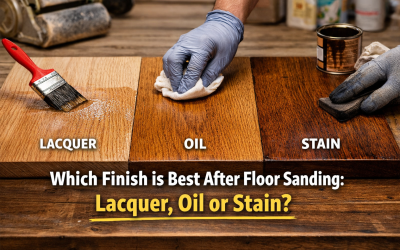
A lacquered finish is often chosen where clients want strong surface protection and easier routine cleaning. A hardwax oil or oil finish is often preferred where a more natural, breathable appearance is wanted and localised maintenance is a priority. Bona’s product literature notes some oil and primer systems are well suited to floors with underfloor heating, while Junckers and other manufacturers also provide heated-floor guidance tied to full system compatibility.
If you are also considering colour, staining engineered oak can work beautifully, but the board species, factory finish status and on-site finishing plan must all be checked first. A professional assessment is important before assuming every engineered floor can be sanded and stained in the same way.
For recognised trade guidance on wood flooring and finishing standards, you can also reference the National Wood Flooring Association (NWFA) as an external authority.
When engineered wood over underfloor heating may not be the best idea
There are situations where caution is needed. If the subfloor has unresolved moisture issues, if the heating system is poorly designed, if the building suffers from large swings in internal humidity, or if the chosen product has no clear approval for underfloor heating, the project may need redesigning before installation. None of those are minor details. They are exactly the conditions that often separate a long-lasting floor from an expensive disappointment.
Likewise, if you want a very thick, very wide, highly reactive species with minimal technical data, it may be worth reconsidering the specification. The right answer is not “all engineered flooring is suitable”; it is “the right engineered flooring, correctly installed, is suitable”.
How to choose the right local contractor
If you are getting quotes in Hackney, ask practical questions:
- Is the product specifically approved for underfloor heating?
- What is the maximum floor-surface temperature?
- What moisture tests will be carried out?
- Will the system be commissioned gradually?
- Is the floor being floated or glued down, and why?
- What finish is best for the room’s traffic and maintenance expectations?
- Can the contractor explain how seasonal movement will be managed?
A trustworthy contractor should be able to answer those clearly, not vaguely. The Hackney site’s contact and callback pages are set up for quote requests, while the prices page also gives a useful starting point for understanding finishing upgrades such as oil, stain, or traffic-grade lacquer.
Conclusion
So, is engineered wood flooring suitable for underfloor heating? In most domestic projects, yes — provided the flooring is approved for underfloor heating, the subfloor is dry and properly prepared, the heating is commissioned correctly, and the temperature is controlled within the manufacturer’s limits. That is why engineered flooring is so often the preferred real-wood option for heated floors.
For Hackney homeowners, the smartest approach is to combine aesthetic goals with technical discipline. Choose a product designed for heated floors, work with an experienced installer, and do not cut corners on moisture testing, board selection or commissioning. Done properly, engineered wood over underfloor heating can deliver the comfort of modern heating with the character and value of genuine timber.
To get started, link early in the post to the Hackney Floor Sanding home page and later direct enquiry-ready readers to Contact Us or Request A Callback. Those pages are live on the site and support quote-driven local intent.