

Dust-Free Commercial Floor Sanding for High-Traffic Workspaces
If you run a shop or office in Hackney, your floors are doing a lot more work than you might think. Every day they handle staff on the move, customers coming and going, deliveries, trolleys, chairs on castors, stock displays and the occasional coffee spill. Over time, even the best hardwood or parquet floor starts to look tired, scratched and dull.
That’s where professional commercial floor sanding in Hackney comes in.
With expert repairs, dust-free sanding and hard-wearing finishes, your shop or office floor can be restored to a clean, smart, professional surface that gives the right impression the moment someone walks through the door – without closing your business for days.

Why commercial floors in Hackney wear out so fast
Hackney’s shops, studios and offices are some of the busiest in London. From independent boutiques and galleries to cafes, salons and co-working spaces, many businesses here rely on original wooden floors to give character and warmth.
But commercial floors face a unique set of challenges:
- Heavy daily footfall – Staff, customers, deliveries and visitors constantly crossing the same areas.
- Street dirt and grit – Foot traffic from the pavement acts like sandpaper, scratching the surface.
- Furniture movement – Office chairs on wheels, stock rails, tables and displays dragged or rolled across the boards.
- Spills and cleaning chemicals – Coffee, drinks and regular mopping can weaken older finishes.
- Zoned wear – Entrances, tills, reception desks and corridors often wear out far faster than quiet corners.
Even if your floor was once beautifully finished, after a few years it can start to look tired, patchy and difficult to keep clean. A dull, scratched floor doesn’t just look bad – it can make your whole space feel less professional and less inviting.

Signs your shop or office needs professional floor sanding
Not sure whether it’s time to call in a commercial floor sanding Hackney specialist? Look out for these common signs:
1. The finish has worn away in busy areas
If the lacquer or oil has gone completely in doorways, around the counter or in walkways, the bare wood is now exposed. That means:
- Dirt and moisture are getting into the grain.
- The floor stains more easily and is harder to clean.
- The wood may start to discolour in uneven patches.
At this stage, “quick fixes” like another layer of polish won’t last. The floor needs to be properly sanded back and refinished.
2. Deep scratches and dents that don’t respond to cleaning
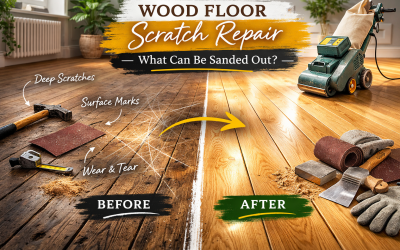
Superficial marks can sometimes be buffed out, but deep scratches from trolleys, chairs, stiletto heels or dropped stock will remain visible no matter how often you mop. When marks are actually cut into the wood, only sanding can remove them.
3. Slippery or patchy surfaces
Old finishes can become polished smooth and slippery in high-traffic zones, while remaining rough elsewhere. That’s both a safety risk and a cleaning nightmare. Professional wood floor sanding levels the surface and allows a fresh, even finish with the right slip-resistance for commercial use.
4. Gaps, loose boards or uneven patches
In older Hackney buildings, it’s common to find gaps between boards, loose panels, or areas that creak and flex underfoot. A proper floor repair and restoration service will secure boards, replace damaged sections and fill gaps before sanding for a safe, solid surface.
5. Your floor simply looks tired and dull
Sometimes there’s no major damage – it just looks drab. Colours have faded, the sheen has gone and the wood no longer “pops”. A professional sand and refinish will revive the natural grain, add depth and richness, and make your interior look fresher and more high-end.

Why choose professional commercial floor sanding (not DIY)?
For a busy Hackney business, DIY is almost never the right answer. Commercial floor sanding in Hackney is a specialist job for several reasons:
Time is money
Closing your shop or office for an extended period costs real money. Professional teams are used to working to tight deadlines and can:
- Work evenings, nights or weekends to minimise disruption.
- Coordinate sanding, repairs and finishing so the floor is ready as quickly as possible.
- Plan the job around your layout, business hours and critical areas like tills or reception.
Professional, dust-controlled equipment
Hiring a small DIY sander from the local shop is rarely enough for a large commercial area – and it often creates clouds of dust that can contaminate stock, computers and fittings.
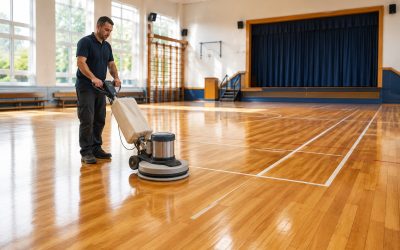
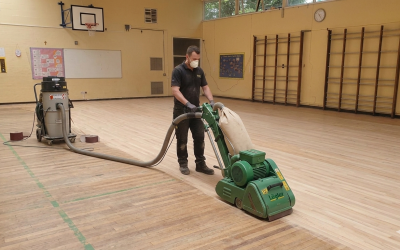
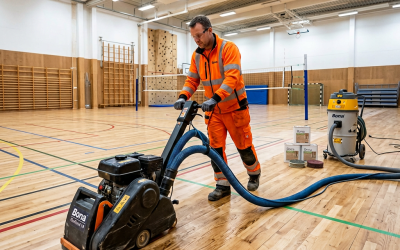
Experienced commercial floor sanders use heavy-duty, dust-free machines and extraction systems to keep your space clean and your staff and customers comfortable. The team at Hackney Floor Sanding use modern dust-control systems designed specifically for indoor environments, helping to protect electronics, stock and air quality.
Experience with different commercial finishes
Finishing a shop or office floor is not the same as finishing a living room. Commercial spaces need:
- Higher durability for heavy traffic.
- The right sheen (often satin or matt to hide wear and dirt).
- Slip-resistance for safety.
- Fast-curing products that allow you to reopen quickly.
An experienced floor sealing and finishing team will help you choose the right system – whether that’s a tough water-based lacquer, hard-wax oil or a specialist commercial product.
Consistent, professional results
DIY sanding can easily leave:
- Waves and dips in the floor.
- Visible sanding marks.
- Uneven edges where the machine didn’t reach properly.
- Patchy finish that wears quickly.
A commercial floor is a big part of your brand image. Professional sanding ensures a smooth, even, attractive finish across the entire space, including edges, corners and tricky areas around fixtures.

Our commercial floor sanding process – step by step
Every business is different, but a typical commercial floor sanding Hackney project follows a clear, proven process.
1. Free site visit and detailed quotation
First, a floor specialist visits your premises to:
- Assess the type and condition of your floor (solid wood, engineered, parquet, etc.).
- Measure the area and note any repairs needed.
- Discuss your business hours and how to minimise disruption.
- Talk through finish options and colour choices.
You’ll then receive a clear, itemised quotation with a realistic schedule – including any evening or weekend work if required.
2. Preparation and protection
Before sanding begins, the team will:
- Move or help you move furniture and fittings where necessary.
- Mask and protect fixed items, skirting boards, built-in units and glass.
- Check for protruding nails or screws and secure loose boards.
Protecting your premises properly saves time later and ensures a cleaner, sharper result.
3. Dust-free floor sanding
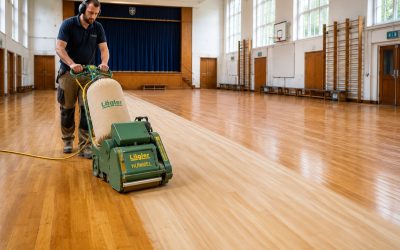
Using professional belt sanders and edging machines, the floor is sanded in stages, starting with a coarse grit to remove old finishes and damage, then progressing to finer grits to smooth the surface.
Modern equipment with efficient dust extraction keeps the environment as clean as possible, which is particularly important in offices with IT equipment and shops with stock on shelves.
Where necessary, specialist equipment is used to reach corners, stairs and tight spaces.
4. Repairs, gap filling and levelling
Once the initial sanding passes are complete, any repairs are carried out:
- Loose boards are fixed and levelled.
- Damaged boards or parquet blocks are replaced with matching timber where possible.
- Gaps are filled using resin mixed with fine sanding dust or with timber fillets, depending on the floor and desired look.
This creates a more stable, draught-free surface and a smarter, more uniform appearance.
5. Fine sanding and polishing
Further sanding and buffing prepares the floor for finishing, removing any remaining marks and creating a consistent surface across the whole area.
6. Staining (optional)
If you’d like to change the colour – perhaps to a deeper tone for a bar or a lighter, Scandinavian look for a design studio – this is the stage where a wood stain or tinted oil can be applied. Test patches are usually done first so you can approve the colour.
7. Commercial-grade finishing
Finally, several coats of hard-wearing finish are applied. For commercial spaces, this is often:
- A water-based polyurethane lacquer – tough, fast-drying and available in matt, satin or gloss.
- Or a hard-wax oil – giving a more natural, low-sheen look with good repairability.
Between coats, light sanding or buffing ensures an ultra-smooth finish.
Once the final coat has cured sufficiently, your space can be put back into use – often the next day for light use, with full hardness achieved over a few days depending on the product used.

Floor sanding solutions for different Hackney businesses
Every type of business in Hackney has its own priorities. A good commercial floor restoration service will tailor the approach to your needs.
Retail shops and boutiques
For street-facing shops and boutiques, first impressions count. Beautiful wooden floors can:
- Make your merchandise stand out.
- Reflect natural light and make spaces feel larger.
- Reinforce your brand’s attention to quality and detail.
In these environments, we usually recommend:
- Durable, easy-clean finishes.
- Satin or matt sheen to minimise visible scuffs.
- Strategic scheduling – for example, sanding overnight and finishing while the shop is closed.
Offices and co-working spaces
In offices, your priority may be a calm, professional atmosphere and reduced noise from foot traffic and chairs.
Office floor sanding can help by:
- Removing old, flaking finishes and uneven patches.
- Using finishes with the right slip and gloss level to balance comfort and smart appearance.
- Working around desks and equipment, or phasing work across different areas so your team can continue working.
Cafés, bars and restaurants
Hospitality spaces demand very tough finishes that can cope with:
- Spills and frequent cleaning.
- High foot traffic in evening and weekend rushes.
- Moving tables, chairs, high chairs and bar stools.
For cafés and restaurants, commercial-grade lacquer or hard-wax oil systems are combined with careful floor preparation to ensure maximum durability and easier cleaning.
Studios, galleries and community spaces
Creative and community spaces often have a more relaxed feel, but the floors still need to perform. Whether you run a yoga studio, art gallery or rehearsal room, professional floor sanding in Hackney can create:
- A smooth, comfortable surface underfoot.
- A neutral backdrop that doesn’t fight with your artworks or furnishings.
- A finish that can be refreshed in future without replacing the floor.

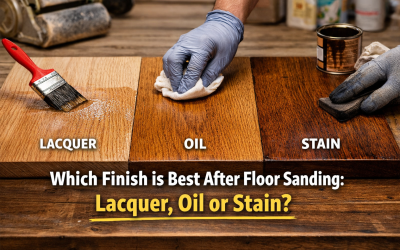
Choosing the right finish for your commercial wooden floor
The finish you select has a big impact on how your floor looks, feels and performs day to day.
Lacquer (varnish)
Best for: High-traffic environments that need maximum durability and minimal maintenance.
- Forms a hard, protective film on top of the wood.
- Resists spills and cleaning products better than many oils.
- Available in ultra-matt, matt, satin or gloss.
- Ideal for shops, offices and busy reception areas.
Hard-wax oil
Best for: Businesses wanting a more natural look and easier spot repairs.
- Soaks into the wood and leaves a beautiful, low-sheen finish.
- Enhances the grain with a warm, organic appearance.
- Localised repairs are often easier without redoing the entire floor.
- Popular in studios, galleries and design-focused spaces.
Stains and tinted finishes
If your existing floor is an awkward orange or yellow tone, staining can modernise it without replacement. Options include:
- Light Scandinavian tones.
- Warm, mid-brown classics.
- Deep, dramatic shades for bars and restaurants.
- Grey or smoked tones for contemporary offices.
A specialist floor staining and finishing service will test colours on your actual floor and show you how they look with your lighting.

Working around your business: evenings, weekends and overnight
One of the biggest concerns for any business is downtime. A good commercial floor sanding Hackney team understands that closing for several days may simply not be an option.
That’s why flexible scheduling is so important. Depending on the size and layout of your premises, it may be possible to:
- Work overnight – sanding and coating after closing time so you can reopen the next day, sometimes using fast-curing products.
- Use weekends and bank holidays – keeping disruption to weekday trade to a minimum.
- Work in phases – for large open-plan offices, one half of the space can be sanded while staff temporarily work in the other.
The Hackney Floor Sanding team offer 24/7 assistance, reflecting their experience working around busy commercial schedules.
Frequently asked questions about commercial floor sanding in Hackney
How long will my shop or office need to be closed?
This depends on:
- The size of your floor.
- How many repairs are needed.
- The type of finish chosen.
Many small to medium-sized commercial floors can be sanded and finished over one or two days, often using evenings and weekends to minimise closure. During your survey, you’ll get a realistic schedule so you can plan staff and customers around the work.
Will there be a lot of dust?
Professional dust-free floor sanding equipment is designed to capture the vast majority of dust at source. While no system is 100% dust-free, modern machines with powerful extraction keep dust to an absolute minimum, which is essential for shops with stock on display and offices full of computers.
Can you match the existing colour of my floor?
In many cases, yes. Through test patches and careful product selection, it’s often possible to:
- Match your original shade closely.
- Or intentionally update it to a more modern tone.
Bear in mind that freshly sanded wood is lighter than old, oxidised wood, so some tonal difference is normal – but a skilled finisher can get very close.
How long will the new finish last?
With proper care, a professionally sanded and finished commercial floor can look good for many years. Lifespan depends on:
- How busy your premises are.
- How well entrance mats keep grit off the floor.
- Whether furniture is fitted with protective pads.
- Your cleaning routine and products.
The good news is that, when the finish does eventually show wear, a light re-coat is often all that’s needed – not a full resand.
Is it cheaper to replace the floor instead?
In most cases, no. Replacing a wooden floor involves:
- Removing the old boards or parquet.
- Subfloor preparation.
- Buying and installing new timber.
- Sanding and finishing the new floor anyway.
If your existing floor still has enough depth and structural soundness, professional wood floor restoration is usually far more cost-effective – and preserves the character of your building.
Simple maintenance tips after floor sanding
Once your commercial wood floor sanding project is complete, a few simple habits will help keep it looking good:
- Use good entrance mats to trap grit before it reaches the floor.
- Fit felt pads to the feet of chairs, tables and display units.
- Avoid harsh chemicals – use recommended cleaners for lacquered or oiled floors.
- Wipe up spills quickly to prevent staining.
- Rearrange movable displays occasionally to even out wear patterns.
Your floor sanding company should provide tailored aftercare advice based on the finish they’ve applied.

Ready to transform your commercial floor in Hackney?
If your shop, office or studio floor has seen better days, you don’t have to live with dull boards, deep scratches and stubborn dirt. With professional Hackney commercial floor sanding and restoration, you can:
- Refresh the look of your entire business.
- Make cleaning faster and easier.
- Protect your investment in original timber floors.
- Give customers and staff a smarter, more welcoming environment.
For expert advice, flexible scheduling and dust-controlled floor sanding in Hackney backed by decades of experience, get in touch with Hackney Floor Sanding today.
Book your free on-site assessment, discuss your options, and find out just how quickly your busy commercial space can go from worn and tired to clean, professional and ready for business.